
At Dawn on the Coorong
Goolwa Pipi Co. Australia's Hand-Harvested Pipi Fishery: On a 150-kilometre spit of sand at the mouth of the Murray, a coalition of fishing families and a Ngarrindjeri company hand-harvest most of Australia's pipi catch — under independent quota, by foot, at dawn.
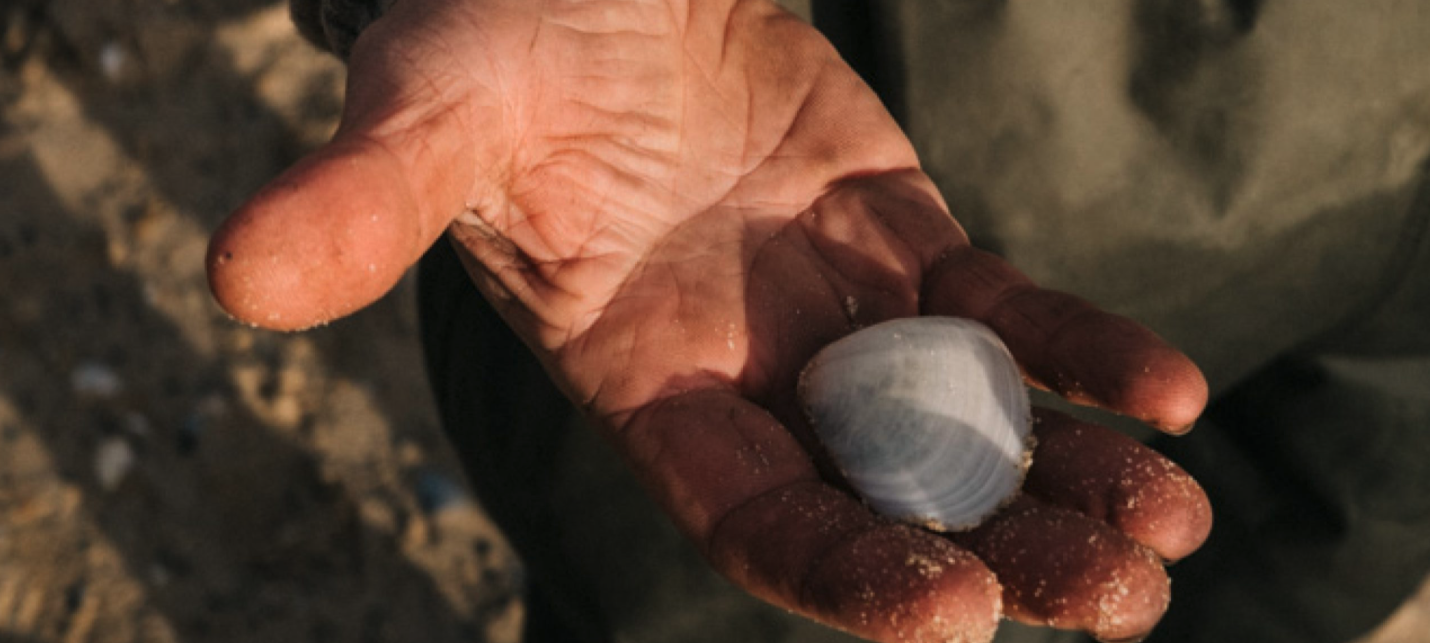
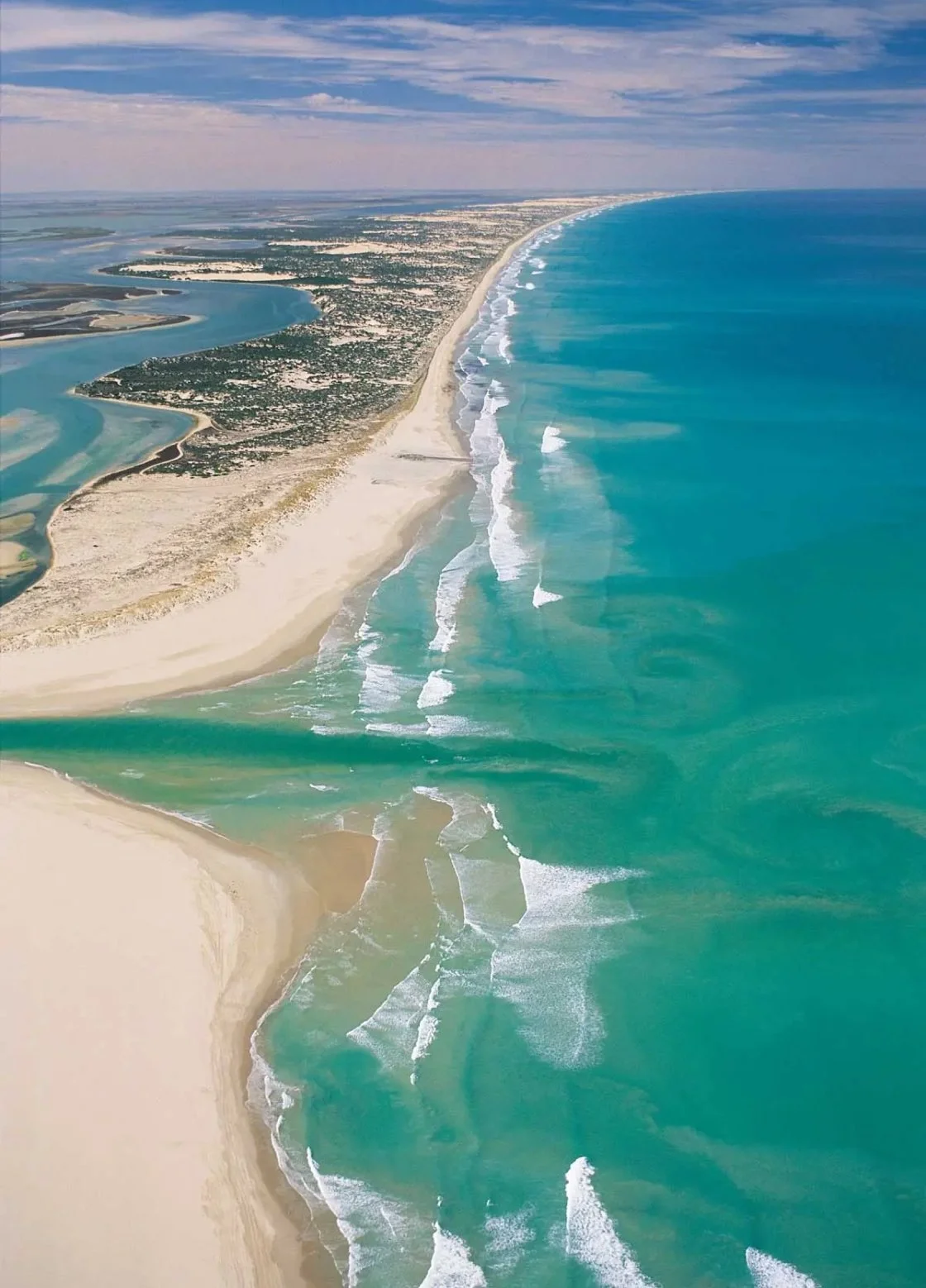
On the Younghusband Peninsula — a 150-kilometre spit of sand bounding the Coorong on the southern coast of South Australia — Goolwa Pipi Co. hand-harvests the pipi (Donax deltoides), the edible saltwater clam endemic to Australia and increasingly sought by chefs across the country. Some 85 percent of Australia's pipi catch comes from this single stretch of beach. Most of it is reachable only by barge.
The company was formed in 2014, emerging from a Coorong harvesters' association established in 2007. It brings together three founding fishing families — Hoad Fisheries, Captain Cockle and Coorong Cockles — alongside KutiCo, a Ngarrindjeri company that fishes the same beach. Together they hold roughly 70 percent of the Coorong pipi fishery quota. Managing director Tom Robinson, who came to the work over twenty years ago from an executive career at an Adelaide advertising agency, runs the business from the company's Port Elliot processing plant.
“We used to just take away the larger cockles, which are the breeders. But it’s much better to take all sizes.”
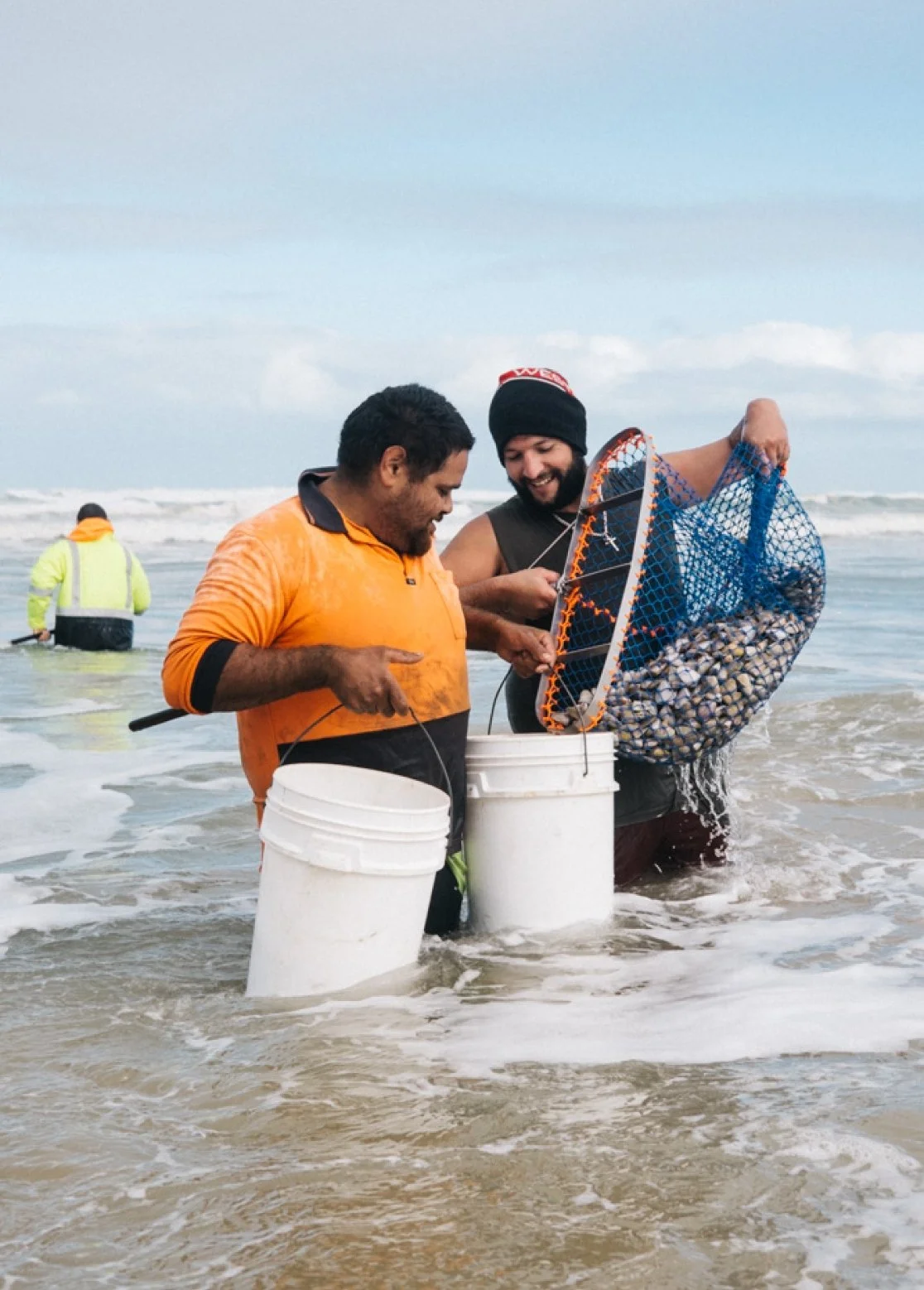
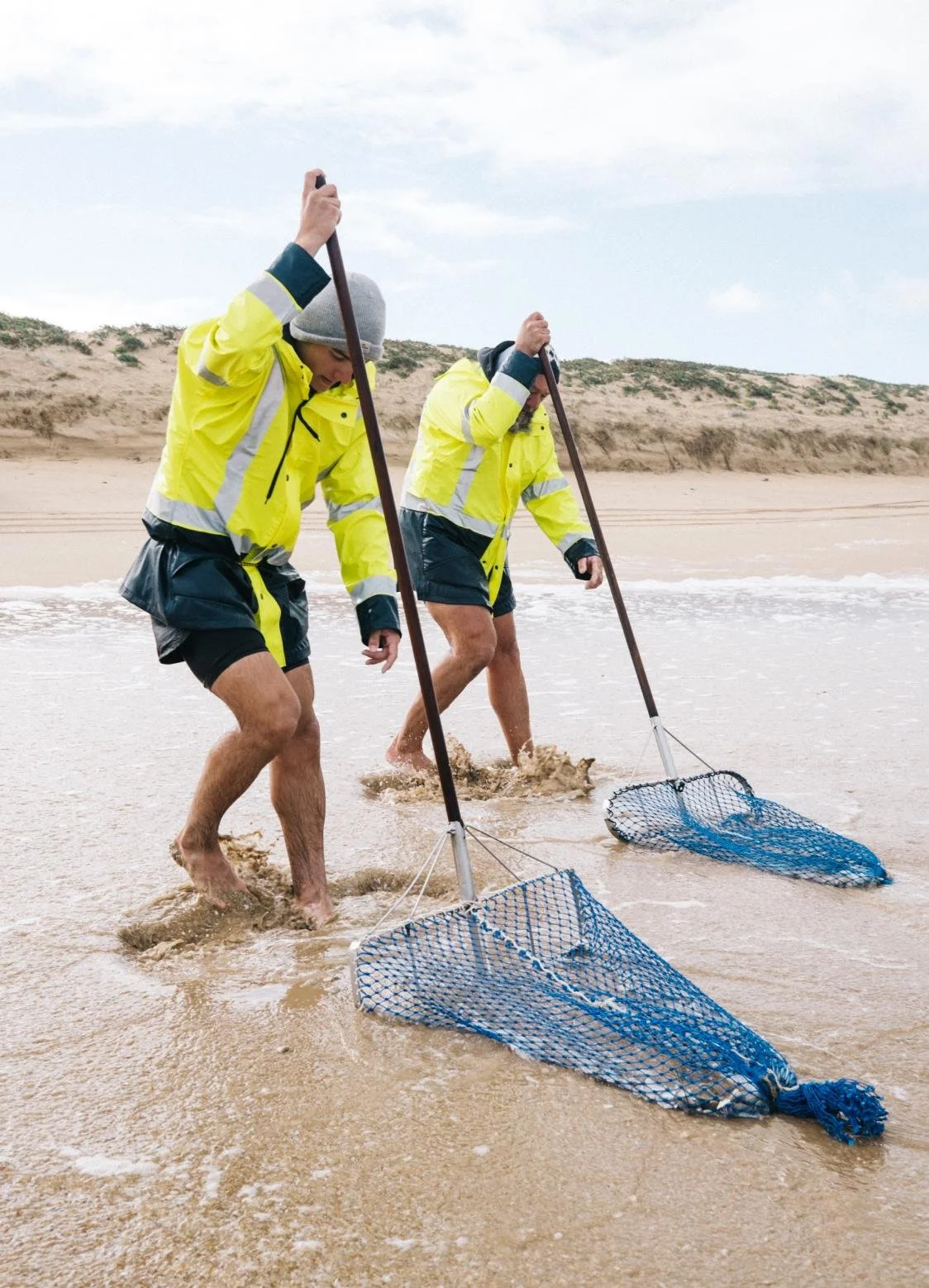
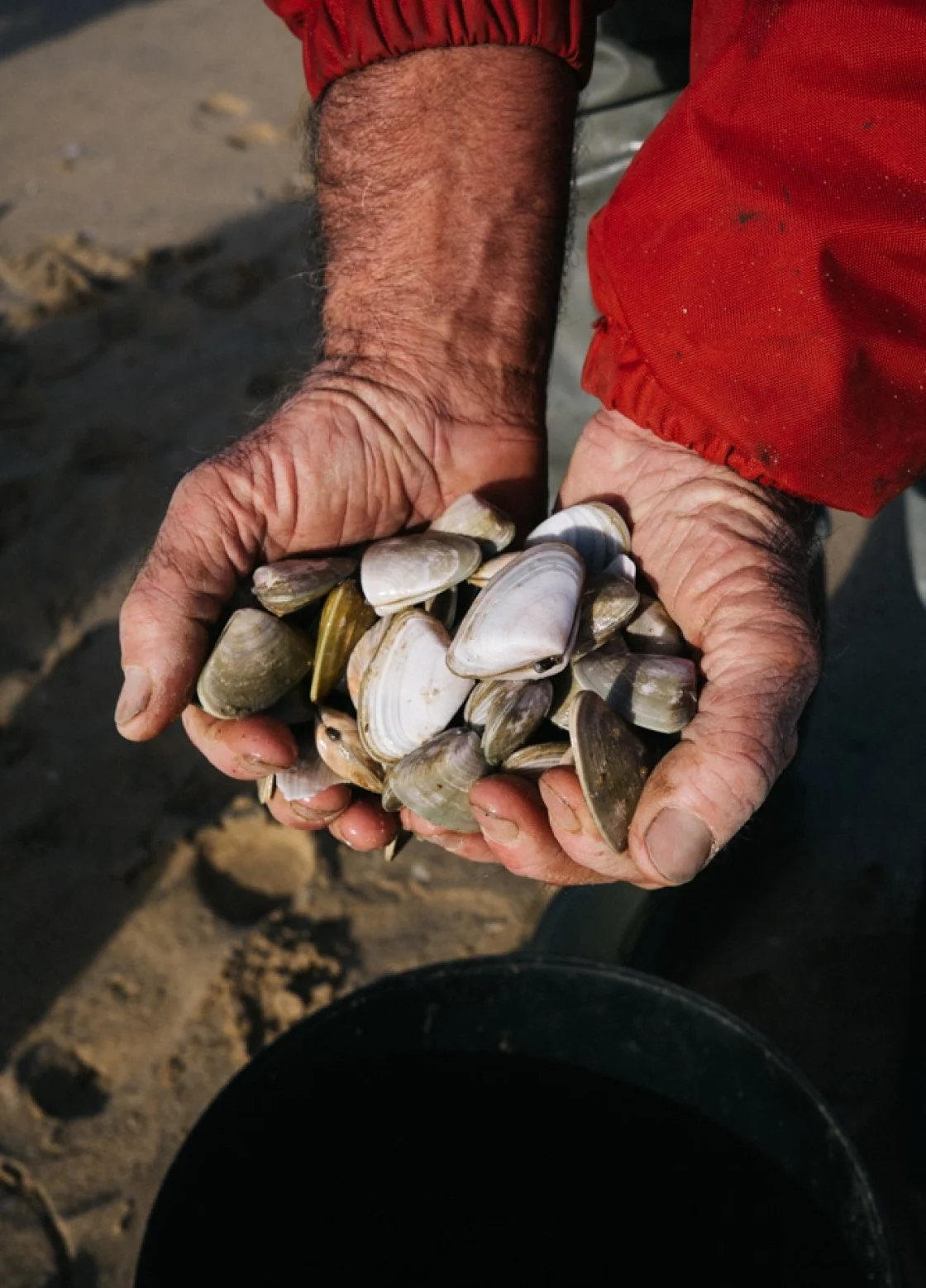
The harvest is hand work, done in the pre-dawn cold. Crews ferry by boat across the lagoon and drive out across the dunes by ute to find the day's tide. Once a stretch of beach has been read for the patches of puckered sand that mark feeding pipis, the crew moves into the shallows and begins what the cocklers call the "pipi shuffle" — heels working like pestles, feet like paddles, micro-stepping backwards through the wet sand to draw the buried clams to the surface. A long-handled net scoops the catch on the next surge of swash. A full sack weighs 20 kilograms; a good day is 50 sacks per crew.
Once the harvest is loaded onto the back of a Land Rover it is first sorted through a rotating machine the crews call the "hurdy gurdy." Undersized pipis are spat back onto the sand and translocated to less-populated areas of the beach, where they have room to grow. The sized catch is bagged and driven north to the company's Port Elliot processing plant.
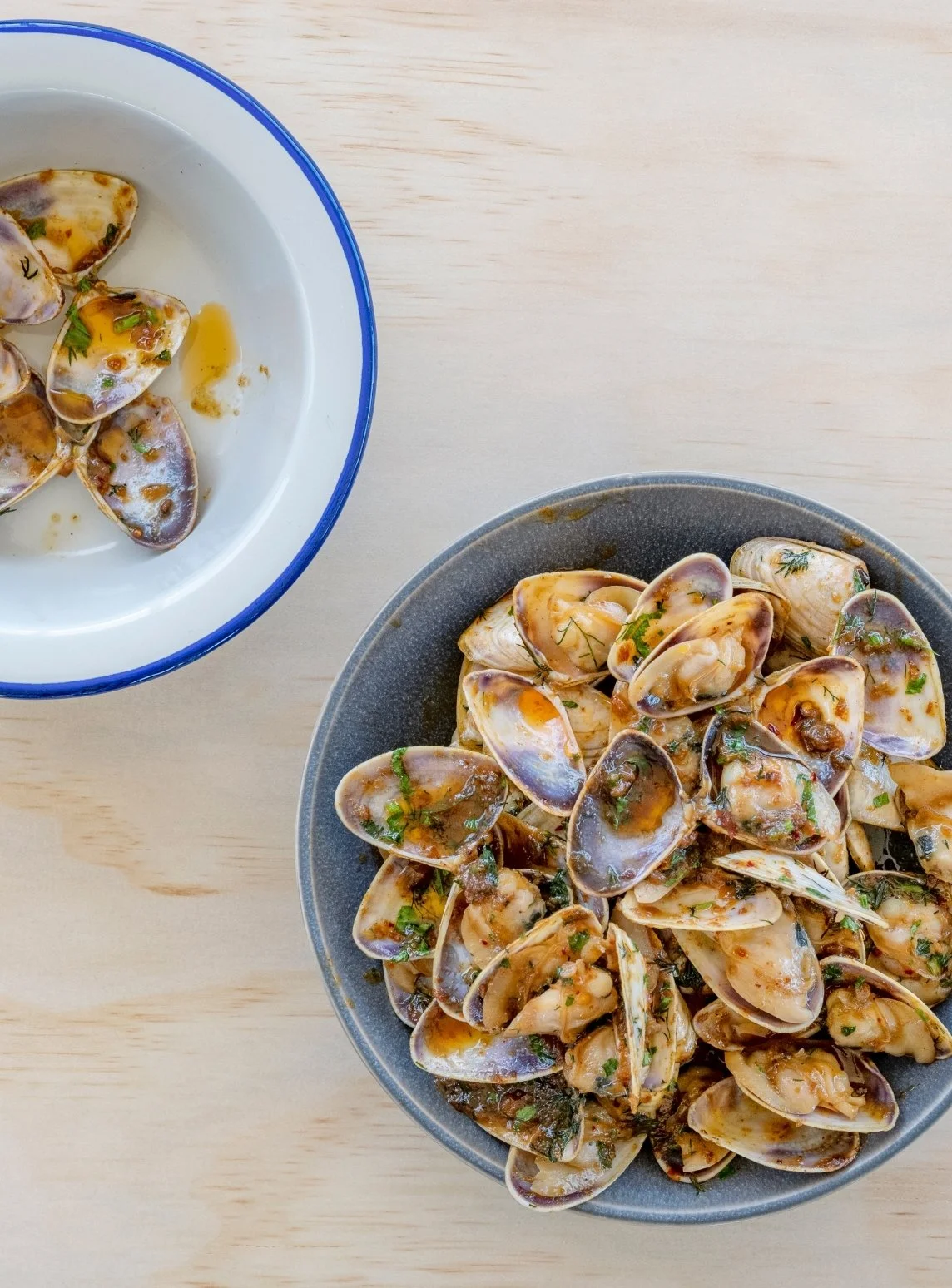
“Roach plates them by the kilo bowl in chilli jam and lemongrass with sourdough to mop up, or on bell-shaped campanelle pasta with garlic, butter, lemon and saltbush.”
Ten kilometres south of the Hoad crew, KutiCo's Ngarrindjeri cocklers work the same beach with the same method. The word *kuti* is Ngarrindjeri for the pipi, and the connection runs longer than the company name. High in the dunes along the peninsula are middens of pipi shells dating back 19,000 years, marking what was once one of the most densely populated regions on the continent before European settlement. The same fishery the cocklers walk into at dawn was a food source for the Ngarrindjeri for hundreds of generations before it became a quota-managed commercial harvest.
KutiCo and the three founding families share the beach, the conditions, and the same quota framework.
The Coorong pipi fishery's quota is set by an independent Fishery Independent Survey — an externally-administered assessment of stock health. Pre-quota, harvests at times reached 1,300 tonnes a year, a pace the fishery could not sustain. The current ceiling, set at 550 tonnes for next year, represents a 100-tonne increase on the previous year but sits well below the historical peak. The hurdy gurdy's translocation of undersized stock, and the deliberate broadening of harvest across all size classes rather than only the larger breeders, are deliberate management choices that shift the fishery toward greater resilience.
The isolation of the Younghusband Peninsula is its own form of stewardship. Most of the beach is unreachable except by barge; crews swap vehicles every few days for servicing against the salt. The work is hard, but the absence of easy access means stocks can build without pressure.
At the Port Elliot processing plant, the day's catch is sorted by size, de-sanded in tanks for around a day, and packed live — either in 15-kilogram cartons for restaurants and wholesalers, or in 1-kilogram vacuum-sealed packs. Daily processing capacity reaches around 3.5 tonnes. Most product moves into restaurants across the eastern states.
The first delivery each day, however, doesn't travel far. The Kuti Shack — a beachside dining space on Goolwa Beach run by chef-owner Brendan Roach and Vanessa Button — sits a few minutes from the processing plant and serves pipis, by Roach's own count, "breakfast, lunch and dinner." Roach plates them by the kilo bowl in chilli jam and lemongrass with sourdough to mop up, or on bell-shaped campanelle pasta with garlic, butter, lemon and saltbush.
“The methodology is artisan and unfashionable — the Galah magazine feature that introduced the fishery to a wider audience called it “almost a bit medieval”
The Coorong is among the few places in Australia where a wild-caught shellfish is harvested by hand, sorted on the back of the ute that drove out at four in the morning, and packed live the same day. The methodology is artisan and unfashionable — the Galah magazine feature that introduced the fishery to a wider audience called it "almost a bit medieval" — but the systems wrapped around it (independent quota, all-size harvest, on-beach translocation of undersized stock, Ngarrindjeri co-stewardship) are the kind of structural choices most fisheries are slow to make.
Through partnerships with HarvestStack, Goolwa Pipi Co. now reaches chefs and buyers across the country directly. The result is a fishery that is at once one of Australia's oldest practices and one of its most quietly progressive — a hand-harvested wild shellfish that asks nothing of the kitchen except what the kitchen does well.
Key Stats
Founded: Goolwa Pipi Co. formed 2014, emerging from a Coorong harvesters' association established in 2007
Location: Younghusband Peninsula, Coorong, South Australia (Ngarrindjeri Country)
Structure: Three founding fishing families — Hoad Fisheries, Captain Cockle, Coorong Cockles — alongside KutiCo, a Ngarrindjeri company that fishes the same beach
Size: The Coorong yields around 85 percent of Australia's pipi catch
Practices: Hand-harvested at dawn using the "pipi shuffle"; size-sorted on-beach via the rotating "hurdy gurdy"; undersized pipis translocated
Business Model: Free-range managed (grow → process → deliver); direct-to-chef; price-setter, not wholesaler-led
Processing: Port Elliot plant — sorted, de-sanded ~24 hours, packed live; up to 3.5 tonnes/day capacity